The Architecture of Opportunity: Why Event Lifecycle Alignment Is the Future of Live Revenue
Event-Day Compression
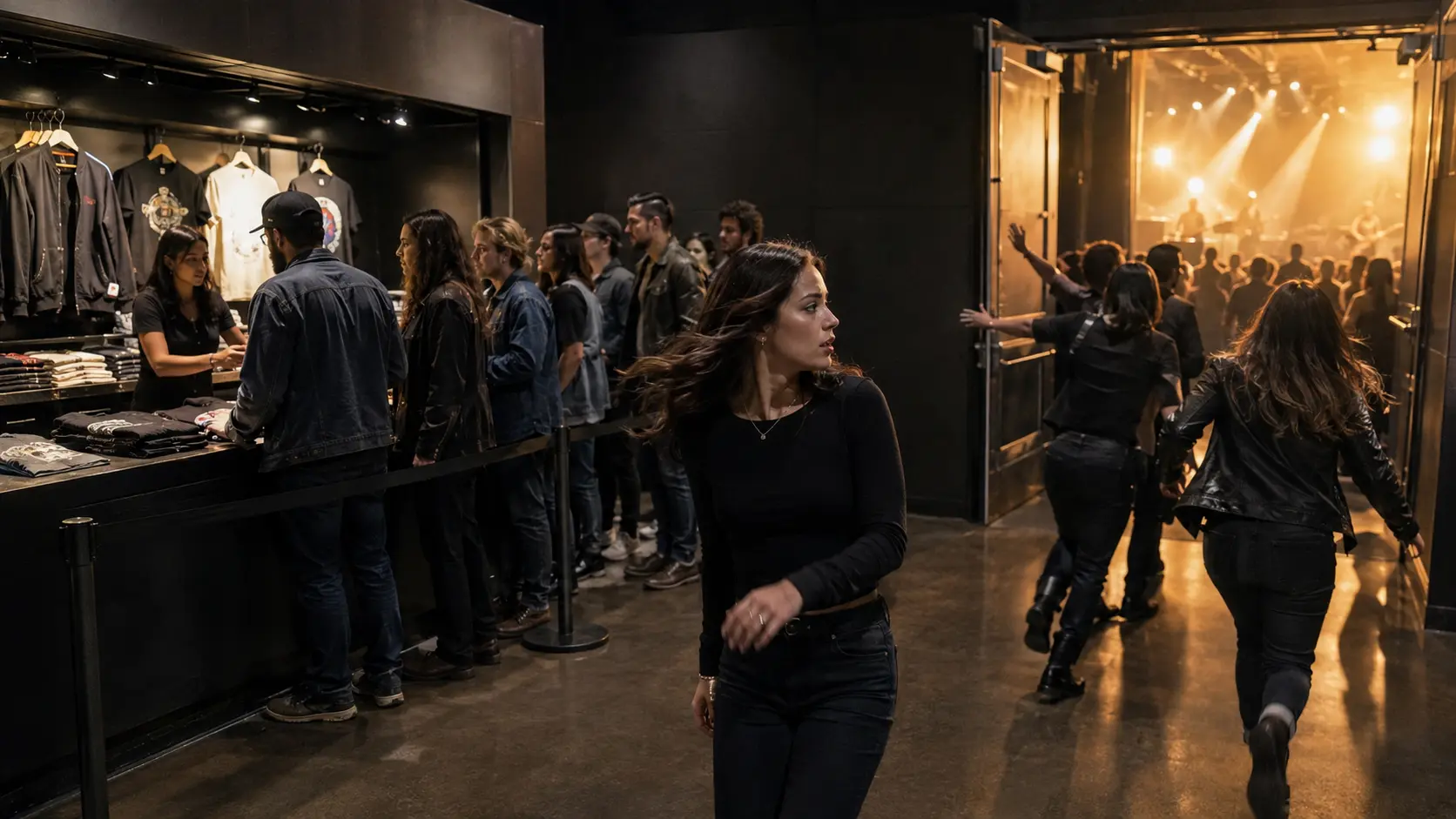
Live-event commerce has been trained to behave like a single, frantic moment. Most teams assume the 3–6 hour runtime is the only window where meaningful revenue can happen. That assumption isn't just limiting — it creates a bottleneck that forces demand, inventory, and fulfillment into the most constrained part of the experience.
When sales are compressed into the live window, organizations often mistake operational congestion for a ceiling on demand. Lines get longer, staff gets overwhelmed, payments slow down, and the conclusion becomes: "Fans would buy more if the venue could handle it." In reality, the existing operation is mis-timed.
Timing as Revenue Surface
Standard ecommerce assumes steady-state availability: products exist, pages are live, and buyers self-select over time. Live events are not steady-state environments. They are volatile, schedule-driven existing operations with hard constraints on attention, movement, and fulfillment.
Event Lifecycle Alignment treats timing as a controlled asset. The objective is not "more offers." It's structured windows that make demand manageable, enforceable, and measurable.
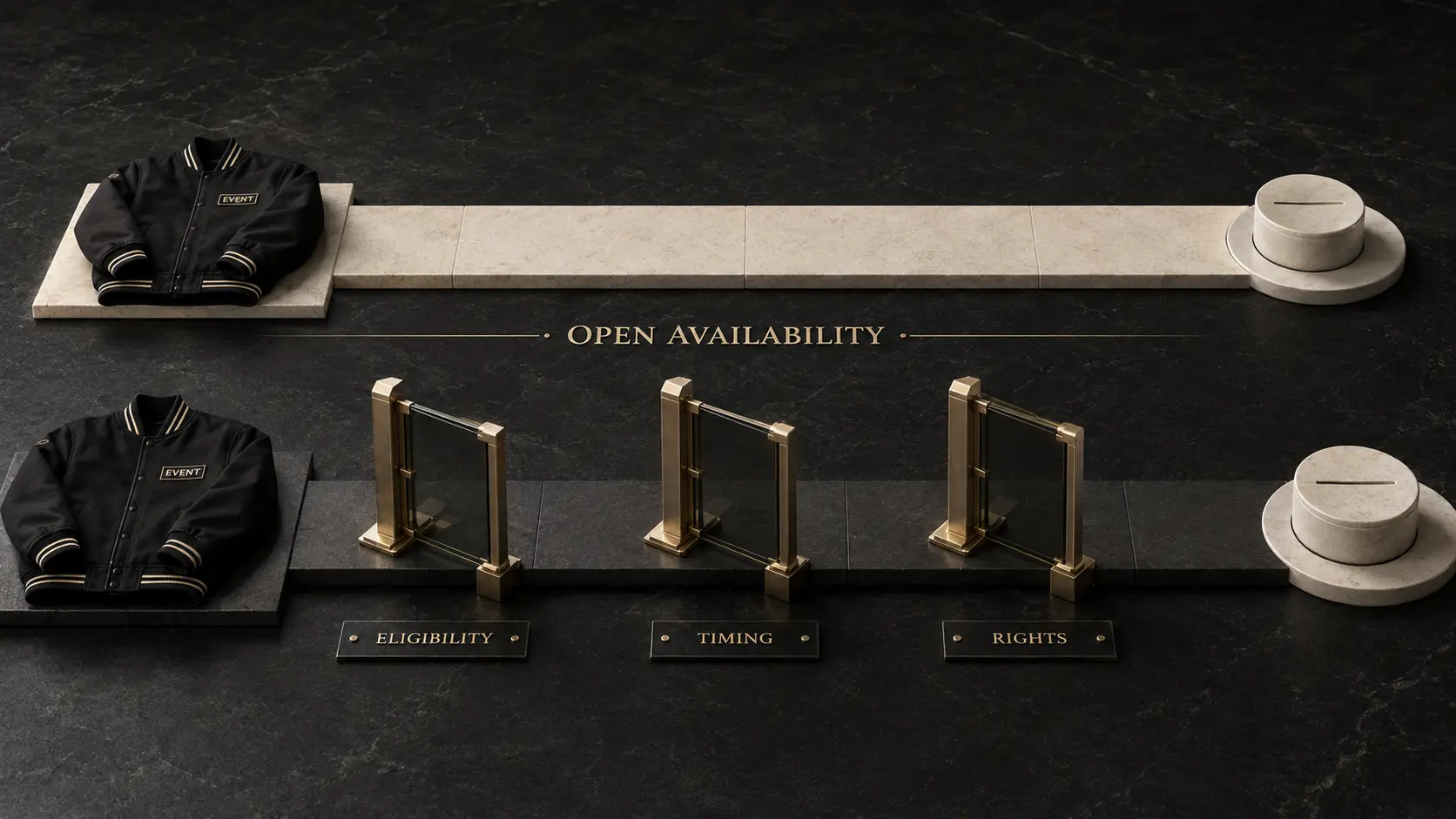
Lifecycle alignment is not a marketing calendar. It is revenue architecture — defined windows, enforced eligibility, and clear authority boundaries.
Three Commercial Phases
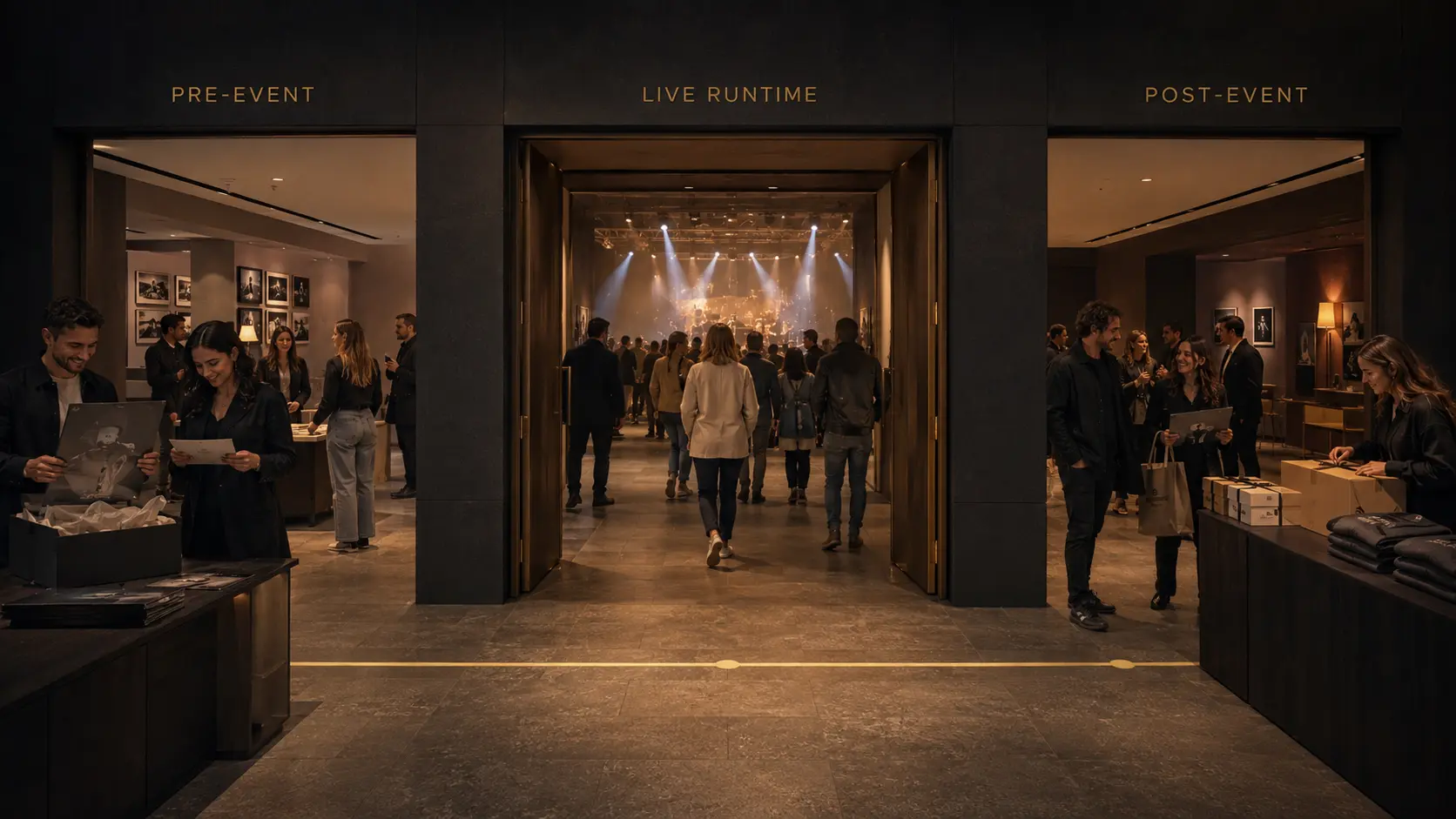
Alignment requires a model that governs commerce before, during, and after the show. Each phase has distinct goals, rules, and constraints.
1) Pre-Event Access Window
This phase exists to validate demand and secure early commitment under controlled conditions. It reduces speculation by moving intent capture upstream, when fans are attentive and logistics are still flexible.
- Primary job: validation + early conversion
- What must be defined: eligibility rules, inventory reservation logic, delivery method
- Common unlocks: ticket-confirmation access, presale entitlements, purchase-verified offers
2) Live Runtime Window
The live window is peak energy — and peak constraint. Alignment doesn't try to force everything into runtime. It focuses runtime on what only runtime can do: high-velocity conversion inside defined delivery surfaces.
- Primary job: velocity + experience-timed conversion
- What must be defined: allowed surfaces, runtime inventory exposure, cutoff logic
- Constraint reality: movement, congestion, staffing, attention fragmentation
3) Post-Event Extension Window
Demand doesn't end at the doors. The "afterglow" is real: fans revisit media, share moments, and decide what they wish they bought. The post-event window captures that demand without forcing it through runtime bottlenecks.
- Primary job: capture tail demand + complete fulfillment cleanly
- What must be defined: cutoff date, shipping/pickup rules, returns/exchanges boundaries
- Key benefit: revenue without operational collision
Alignment vs. Activation
There's a critical distinction between activation and alignment. Activation is simply turning something on. Alignment is governance.
Activation
A existing operation is available, offers are live, and buyers are allowed in. The operating assumption is that demand will "figure it out."
Outcome: chaos scales faster than revenue.
Alignment
Windows are defined, eligibility is enforced, and delivery constraints are known in advance. Demand is shaped — not chased.
Outcome: predictability scales with control.
Predictable Revenue
When commerce follows the lifecycle, revenue becomes a existing operation instead of a guess.
- Pre-event: validates demand before you commit to exposure and fulfillment.
- Live runtime: monetizes peak attention without overloading operations.
- Post-event: captures the tail without forcing fans into lines.
The shift: from "How much can we sell tonight?" to "How do we structure revenue across the experience?"
The Implementation Framework
Alignment isn't achieved by adding more "stuff." It's achieved by locking rules before exposure. A practical implementation framework includes:
- Define Commercial Authority: who owns transaction rules per phase?
- Define Timing Control: exactly when do windows open and close?
- Define Delivery Surfaces: where is value exchanged (pickup, ship, scan, claim)?
- Define Shutdown Rules: how do you exit cleanly without creating fulfillment debt?
Pre-Deployment Decisions
Most live-event programs fail because decisions are left "soft" until the last minute. Lifecycle alignment requires locking a small set of non-negotiables:
- Eligibility: who is allowed to buy, and under what proof?
- Inventory exposure: what is shown in each phase, and what is protected?
- Fulfillment mode: pickup vs ship vs hybrid — and the cutoff rules.
- Exception handling: what happens when a phase ends (and who decides)?
Stop Managing Moments
Event Lifecycle Alignment is the architecture behind sustainable live revenue. When timing becomes a controlled asset — with defined phases, enforced eligibility, and clear boundaries — live events stop being commercial bottlenecks and start becoming repeatable revenue existing operations.