
You Built the Audience. Why Is Everyone Else Monetizing It?
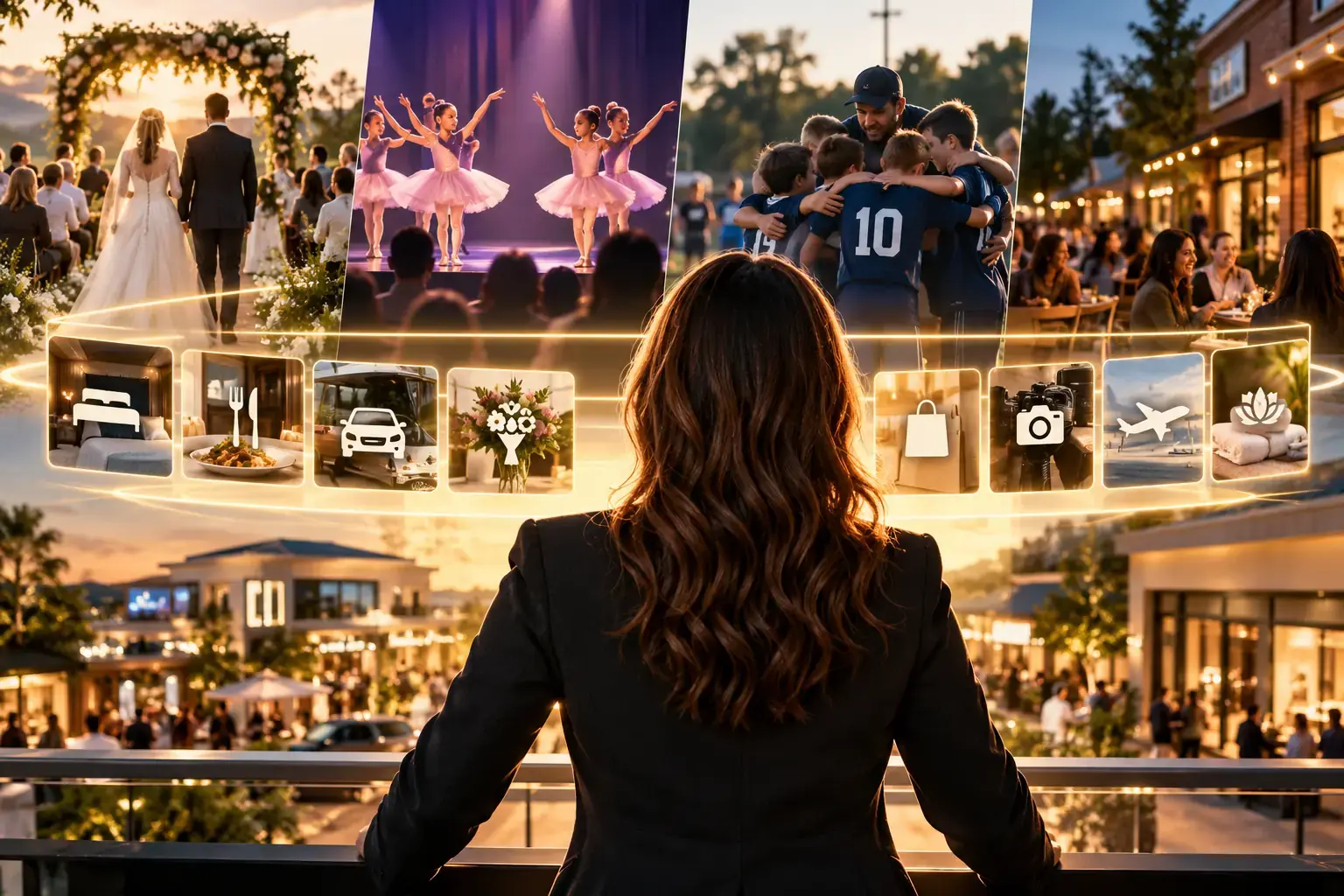
When I started looking closely at the economics surrounding privately assembled audiences, one question kept coming back to me. If you are the person, business, family, team, studio, or organization that spent the time and effort building a group, why has there never been dedicated infrastructure that allows you to participate in the commercial value surrounding that audience?
I am not talking about turning every relationship into a sales pitch. I am talking about recognizing an economic environment that already exists. Whenever people gather around an event, business, team, milestone, season, or shared experience, commercial activity naturally forms around them. People travel, eat, shop, book services, purchase gifts, and make reservations for products connected to where they are going and what they are doing. Third-party businesses already recognize the value of those moments and capture that spending every day.
The missing piece has been live infrastructure that allows the person or organization responsible for assembling the audience to participate in that value too. That is the foundational purpose of the Rivalry Commerce Audience-Owned™ model.
You Created the Environment
A wedding makes this pattern particularly easy to see because the commercial flow is immediate.
A couple brings together 150 guests for an event lifecycle that begins months before the ceremony and extends through the wedding weekend itself. During that window, guests book hotel rooms, arrange transportation, purchase attire, make dinner reservations, buy gifts, schedule beauty services, and spend money across local businesses. That commercial activity does not happen by accident. It exists specifically because the couple created the reason for those people to gather.
The guests were not randomly assembled; they came together around a specific relationship, schedule, and experience. What struck me was not simply that wedding guests spend money, which is obvious, but that the couple created the environment driving all of that revenue while lacking the infrastructure to control or monetize the digital real estate surrounding that lifecycle.
This same economic pattern repeats across every type of assembled group:
- A dance studio spends years developing relationships with local families. During recital season, those families purchase flowers, photography, apparel, beauty services, meals, and gifts connected directly to the performance.
- A youth sports organization brings together players, parents, coaches, and supporters across an entire season. Those families travel, stay in hotels, eat at restaurants, purchase equipment, and book activities around tournaments and team events.
- A local business spends years cultivating a loyal customer base that functions as its own active micro-community.
In each case, an Audience Owner did the hard work of building the group. That audience carries immediate commercial value because relevant businesses want direct access to people who are gathered, engaged, and moving through a defined experience.
Businesses Already Pay for Placement
Businesses have always paid for access to relevant audiences. They purchase event sponsorships, booth spaces, program ads, physical signage, and digital placements because visibility inside the right environment produces measurable results.
The economic principle is already proven. What changes with Rivalry Commerce is who controls that commercial real estate and how that real estate operates across the entire event lifecycle.
Rivalry Commerce delivers a live, licensed commerce layer that allows an Audience Owner to operate governed digital real estate around their community. Instead of existing as a single static ad, this infrastructure remains active across the full lifecycle of an event or season. Within that lifecycle, the Audience Owner can schedule multiple timed Drops tied to specific high-value moments.
For example, a wedding can feature Drops connected to Save-the-Date releases, travel planning, rehearsal dinners, and wedding-weekend arrivals. A sports organization can schedule Drops tied to seasonal registration, tournament weekends, and championship events.
Each Drop creates defined digital inventory, such as sponsor banners, featured placement tiles, and offer tiles. Because the commerce layer runs continuously, participating vendors are not restricted to a single appearance. A vendor can purchase placements across multiple Drops, secure multiple tiles during the lifecycle, and enter the experience whenever their product or service becomes relevant to the audience.
Digital Real Estate Across the Lifecycle
The true value of this digital real estate comes from context and timing. A hotel chain is highly relevant when guests first plan their travel, a local shuttle service becomes valuable as arrival dates approach, and a restaurant becomes essential during the event weekend itself.
Rivalry Commerce gives businesses defined, authorized places to participate exactly when their offers make sense. The Audience Owner is not selling random internet banner ads; they are controlling contextual placements inside a governed environment where timing and engagement are already established. The commercial layer moves fluidly alongside the experience itself.
This structure unlocks multiple commercial moments from a single audience without requiring the Audience Owner to rebuild their group from scratch. A studio, team, or couple creates the environment once, and the infrastructure allows the digital real estate to generate value throughout the entire lifecycle.
Monetizing Real Estate, Not Becoming a Retailer
Importantly, the Audience Owner does not become a merchant. They do not manufacture products, hold inventory, process vendor orders, or manage fulfillment. Participating businesses continue selling their own goods and services through their own authorized checkout channels.
What the Audience Owner controls is the digital real estate surrounding the experience. By monetizing access to a commercial environment they built, Audience Owners capture structured revenue without taking on the operational burden of running a retail store.
The Economic Shift
Search engines monetize search intent, social networks monetize attention, and media companies monetize ad impressions. The underlying economic law across all these industries is identical: access to a relevant audience at the right moment carries immense commercial value.
Privately assembled audiences are no different. When a studio, team, organization, or business builds a community, they have already completed the hardest part of the equation. They established the trust, context, and environment.
Rivalry Commerce provides the live, licensed commerce infrastructure that bridges the gap—allowing Audience Owners to claim the digital real estate surrounding their community and own the economics they created.
You built the group. You created the environment. You should own the real estate around it.
Next in the Series
Part 03 — The Layer That Was Missing